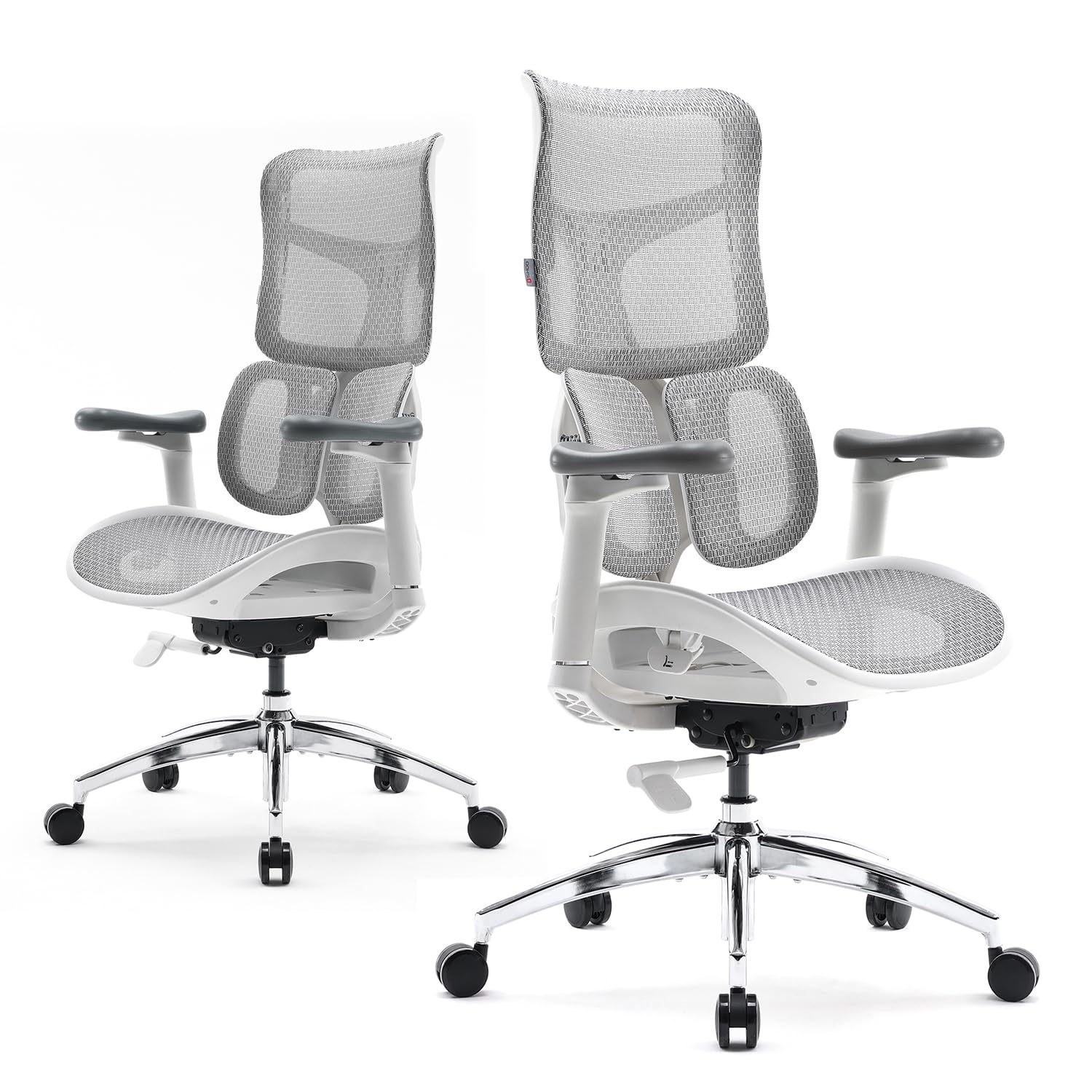
The SIHOO Doro S100 is an ergonomic office chair built around adjustable lower-back support, coordinated armrests, and a backrest that can be set at several heights.
This sihoo s100 chair review looks at how those features may fit daily desk work and what to check for your own body and workspace.
Doro S100 Review Summary
The quick verdict
100+ ratings
Read Amazon ReviewsSIHOO Doro S100
The SIHOO Doro S100 suits desk workers who want adaptive lumbar support, a positionable backrest, and armrests that move with the chair when reclining.
- Dual dynamic lumbar support with four springs and an automatic adjustment mechanism, intended to adapt as posture changes.
- 4D armrests with soft, thick surfaces; they adjust up to 2.76 inches vertically and 1.18 inches front to back, with 72 degrees of inward and outward movement.
- Armrests coordinate with the backrest when reclining, keeping arm support linked to chair movement.
- Independent upper-backrest adjustment with five positions; the described user-height range is 5 feet to 6 feet 3 inches.

Pros
- The dynamic dual-wing lumbar design is more adaptable than a single fixed support point.
- Multiple backrest positions and a defined height range give buyers practical fit details to compare with their own proportions.
Consider before buying
- The maximum recline is 135 degrees, which may feel limited to buyers seeking a deeper reclining position.
- A stated height range is only a starting point; buyers should check whether their feet, thighs, and lower back align comfortably at the desk.
Read the full review summary
The Doro S100 offers several ways to tailor the chair to your posture: its dual dynamic lumbar system uses four springs for automatic adjustment, the upper backrest has five positions, and the seat depth adjusts across a 1.97-inch range.
The armrests move in multiple directions and coordinate with the backrest as it reclines, so the chair is designed to keep support points better aligned as you change position.
Its listed height range spans users from 5 feet to 6 feet 3 inches, which gives a useful starting point for a broad range of adults.
That range cannot guarantee a comfortable fit for every body, so seat height, desk clearance, and where the lumbar wings meet your back are worth checking.
The stated maximum recline is 135 degrees, making it a chair for work and breaks rather than a dedicated lounge seat.
The buying factors
Doro S100 Scorecard
Editorial scores reflect listed features and buyer fit; they are not laboratory measurements or customer ratings.
Lumbar adjustability
The dual dynamic support uses four springs and is described as automatically adapting to body shape and posture.
Armrest flexibility
The 4D armrests adjust vertically, forward and backward, and inward or outward, and coordinate with recline.
Backrest fit range
The upper backrest has five settings, with the product described for users from 5 feet to 6 feet 3 inches.
Seat-depth tuning
A 1.97-inch depth adjustment offers some room to tune thigh support, though the range is specified rather than extensive.
Recline options
The chair reclines up to 135 degrees, giving a break position while keeping the stated maximum moderate.
Material and certification details
High-resilience mesh and BIFMA and SGS certifications are identified, while detailed construction and warranty terms are not provided here.
Key Features and Specifications of Doro S100
- Dual dynamic lumbar support with four springs and an automatic adjustment mechanism, intended to adapt as posture changes.
- 4D armrests with soft, thick surfaces; they adjust up to 2.76 inches vertically and 1.18 inches front to back, with 72 degrees of inward and outward movement.
- Armrests coordinate with the backrest when reclining, keeping arm support linked to chair movement.
- Independent upper-backrest adjustment with five positions; the described user-height range is 5 feet to 6 feet 3 inches.
- Seat-depth adjustment across 1.97 inches and a waterfall-shaped cushion intended to spread contact across the thighs and hips.
- High-resilience mesh back and a maximum recline angle of 135 degrees; BIFMA and SGS certifications are noted.
Pros and Cons of Doro S100
Pros
- The dynamic dual-wing lumbar design is more adaptable than a single fixed support point.
- Multiple backrest positions and a defined height range give buyers practical fit details to compare with their own proportions.
- Armrests move in several directions and follow the backrest during recline.
- Adjustable seat depth and a waterfall-shaped cushion address thigh contact as well as back support.
Consider before buying
- The maximum recline is 135 degrees, which may feel limited to buyers seeking a deeper reclining position.
- A stated height range is only a starting point; buyers should check whether their feet, thighs, and lower back align comfortably at the desk.
- The available product details do not specify seat-height range, overall dimensions, weight capacity, or warranty terms, so confirm these against your desk and support needs before buying.
Who Should Buy Doro S100?
Good fit
Consider the Doro S100 if you spend much of the day at a desk and want a chair with several ways to adjust support.
Its lumbar mechanism, independently positioned upper backrest, and adjustable seat depth give you more fit options than a basic task chair with fixed contact points.
It may be especially useful if you shift between upright work and a modest recline.
Because the armrests coordinate with the backrest, they are designed to move along with that posture change; their inward and outward adjustment also gives you room to tune elbow placement for your keyboard and desk.
Before choosing it, compare the described 5-foot to 6-foot-3-inch range with your own fit and verify the chair's seat height, desk clearance, and capacity.
Those practical details matter as much as the number of adjustments, particularly if you have a nonstandard desk or need a particular seat height.
Who should skip it
Skip it if you specifically need a recline beyond 135 degrees or are shopping for a chair with an integrated footrest; neither is part of the described design.
It may also be a poor choice if you need a confirmed weight capacity, a precise seat-height range, or clearly stated warranty terms before purchasing. Check those requirements against the current product details first.
How the Doro S100’s adjustments fit a workday
Lumbar movement for changing posture
The chair’s four-spring dual dynamic lumbar mechanism is designed to move with the sitter rather than stay at one fixed position.
That approach could suit people who shift between upright typing and leaning back, although the best fit depends on where the support wings meet your lower back.
Try to assess both the height and pressure of that contact rather than assuming an automatic mechanism will suit every body.
Backrest height and overall fit
Five upper-backrest positions let the user change where the top portion supports the shoulders and neck.
The described range covers users from 5 feet to 6 feet 3 inches, but height alone does not determine fit: torso length and desk setup also affect where the backrest lands.
If possible, confirm the full adjustment dimensions before purchase.
Armrests that follow recline
The 4D armrests adjust vertically, front to back, and inward or outward.
Their coordination with the backrest may help maintain arm support when reclining, which can matter if you use the chair for reading or breaks as well as focused keyboard work.
Check that the armrests can still clear your desk and let you bring the chair close enough to your work surface.
Seat depth and pressure distribution
The 1.97-inch seat-depth range gives some ability to adjust how far the cushion reaches beneath the thighs. Its waterfall shape is intended to broaden contact at the thigh and hip area.
Buyers should check that they can sit back against the lumbar support without the seat edge pressing uncomfortably behind the knees.
Alternatives to Doro S100
Home Office Desk Chairs alternative
17,000+ ratings
Read Amazon ReviewsSIHOO M57 Ergonomic Office Chair
Choose the Doro S100 if five backrest positions, seat-depth adjustment, and armrests that coordinate with recline are your priorities.
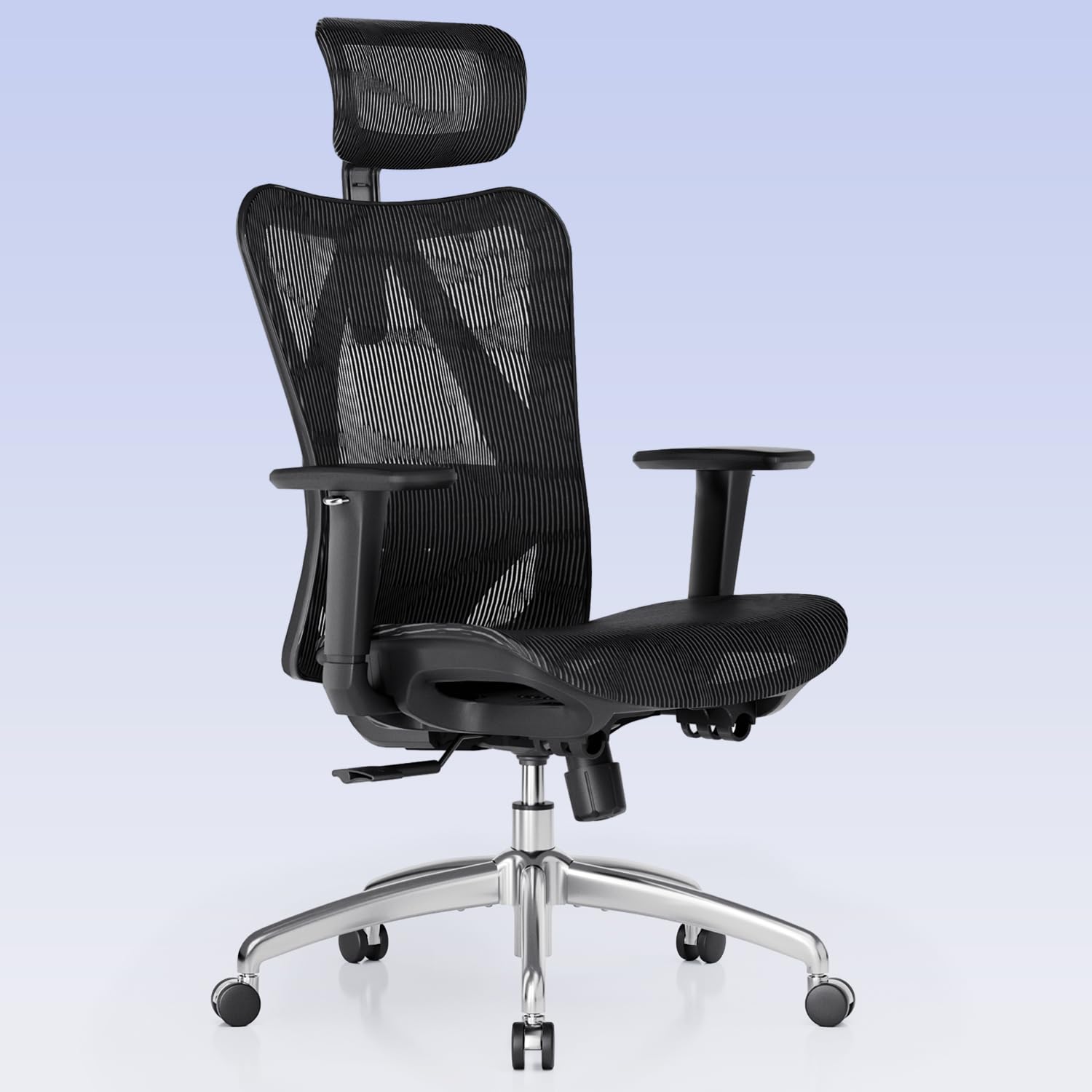
Consider the M57 if you want an adjustable headrest and prefer a chair whose stated capacity and warranty are specified.
- The M57 lists a tilting and height-adjustable headrest, lumbar support adjustable in height and depth, and recline from 90 to 126 degrees.
- It also specifies a 330-pound capacity and a 3-year warranty.
- The Doro S100 pairs a five-position upper backrest with 4D armrests and a dual dynamic lumbar mechanism, and reclines up to 135 degrees.
Home Office Desk Chairs alternative
17,000+ ratings
Read Amazon ReviewsSIHOO B100 Office Chair
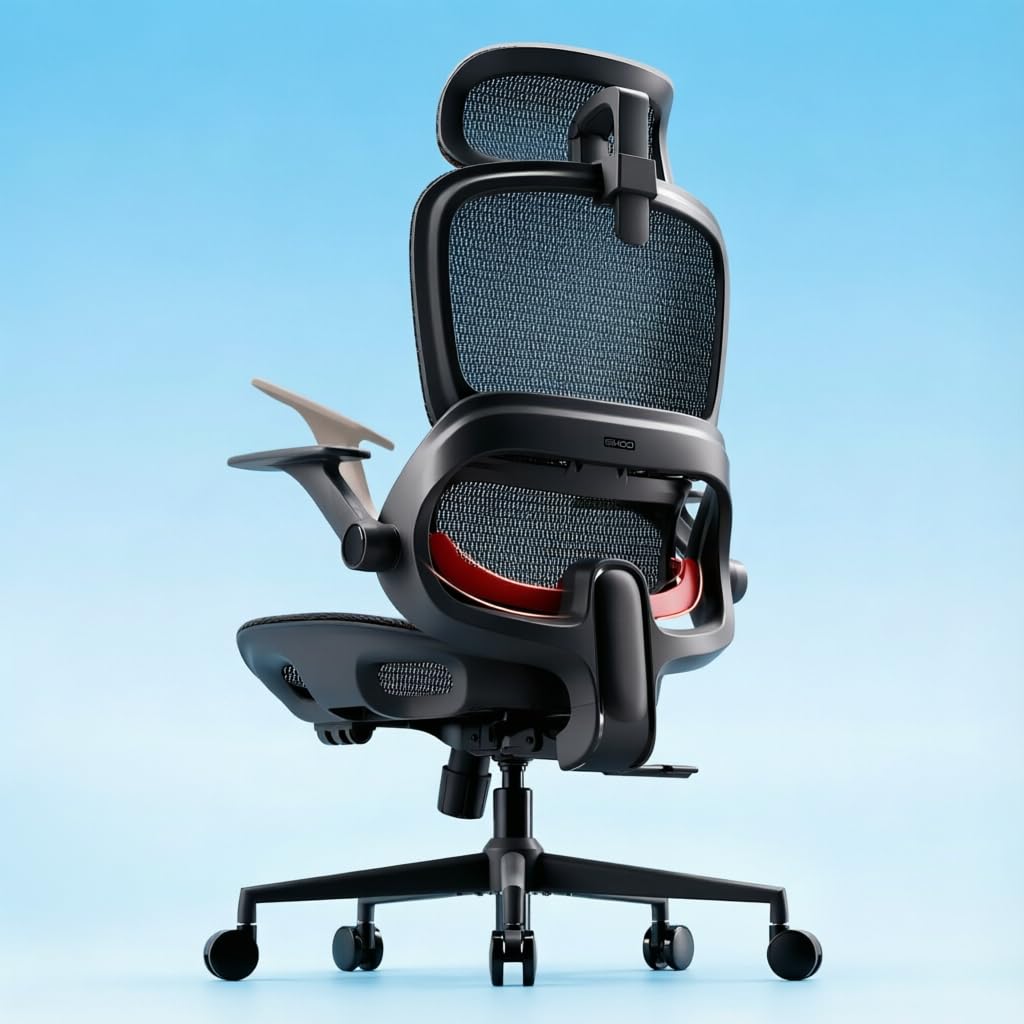
The Doro S100 offers more armrest directions and five upper-backrest positions. The B100 may fit better if you need flip-up armrests to tuck the chair under a desk and want its stated three-angle recline and capacity details.
- The B100 lists three recline angles—110, 125, and 135 degrees—plus a 2D headrest and flip-up armrests that adjust with recline.
- It also specifies a 300-pound capacity and a 3-year warranty.
- The Doro S100 has dual dynamic lumbar support, a five-position upper backrest, and armrests with several adjustment directions.
Is Doro S100 Worth It?
The SIHOO Doro S100 is worth considering if you want a desk chair with adaptive lumbar support and several adjustments for backrest height, seat depth, and arm position.
Its design is particularly relevant for people who alternate between upright work and reclining breaks.
Treat the listed height range as a fit guide, and confirm seat height, capacity, and warranty details before deciding.
If the chair matches your proportions and workspace, its combination of coordinated armrests and adjustable back support makes it a compelling option for a configurable home-office seat.
Your review at a glance
100+ ratings
Read Amazon ReviewsSIHOO Doro S100
The SIHOO Doro S100 suits desk workers who want adaptive lumbar support, a positionable backrest, and armrests that move with the chair when reclining.
- Dual dynamic lumbar support with four springs and an automatic adjustment mechanism, intended to adapt as posture changes.
- 4D armrests with soft, thick surfaces; they adjust up to 2.76 inches vertically and 1.18 inches front to back, with 72 degrees of inward and outward movement.
- Armrests coordinate with the backrest when reclining, keeping arm support linked to chair movement.
- Independent upper-backrest adjustment with five positions; the described user-height range is 5 feet to 6 feet 3 inches.