The TP-Link BE10000 review comes down to whether a tri-band Wi-Fi 7 mesh system with multi-gig ports and room for a large number of devices fits your home.
The two-unit Deco BE63 is aimed at households that need broad coverage and flexible backhaul options.
Deco BE63 Review Summary
The quick verdict
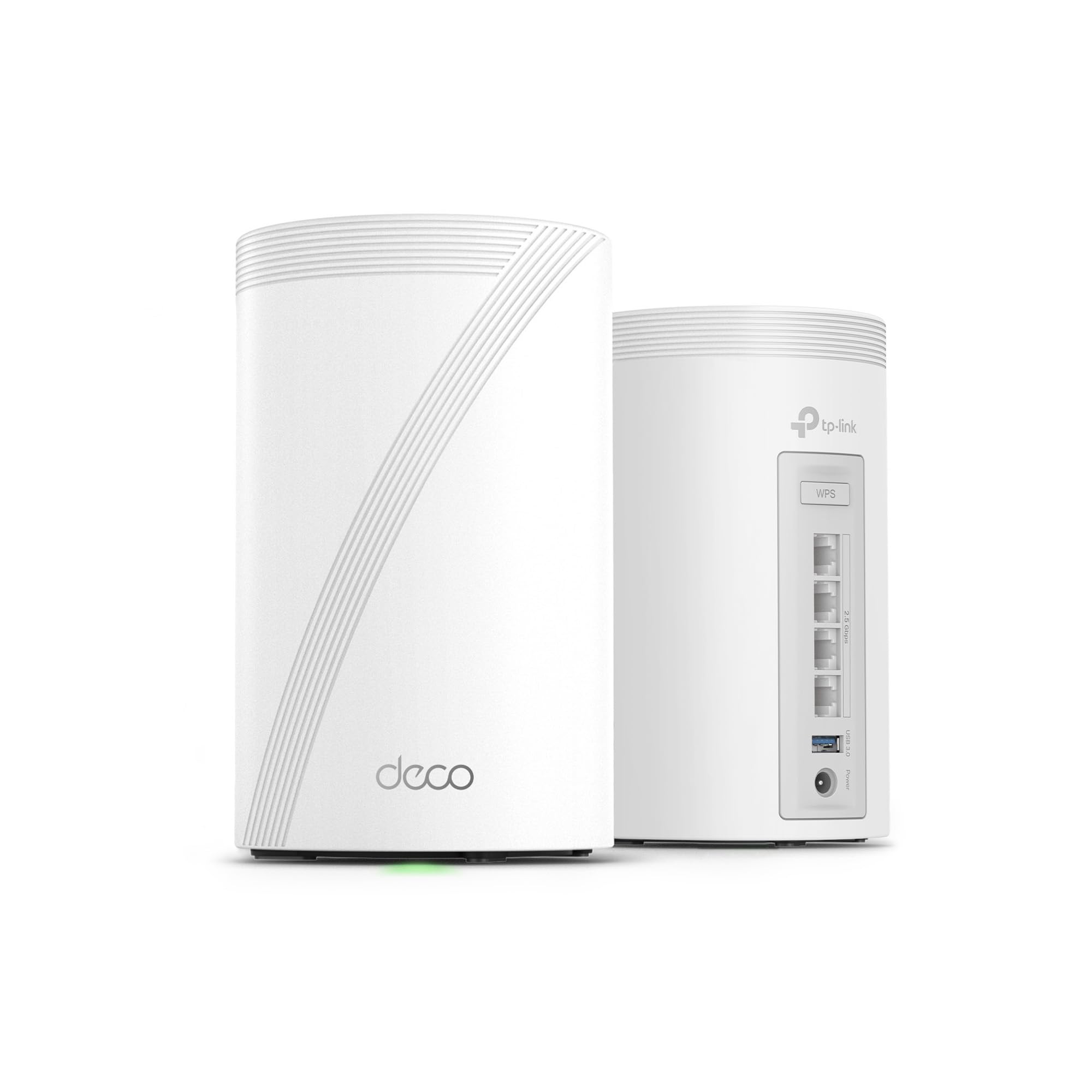
600+ ratings
Read Amazon ReviewsTP-Link Deco BE63
A two-unit Wi-Fi 7 mesh system for households that want broad coverage, multi-gig wired connections, and room for many connected devices.
- Two-unit tri-band Wi-Fi 7 mesh system with a combined BE10000 class rating.
- Wireless rates listed up to 5,188 Mbps on 6 GHz, 4,324 Mbps on 5 GHz, and 574 Mbps on 2.4 GHz.
- Coverage rated up to 5,800 square feet and support for over 200 devices.
- Four 2.5G WAN/LAN ports, a 10G WAN/LAN port, and a USB 3.0 port.

Pros
- Tri-band Wi-Fi 7 gives compatible devices access to 6 GHz alongside 5 GHz and 2.4 GHz.
- A notably flexible wired layout, with four 2.5G ports and a 10G WAN/LAN port.
Consider before buying
- The advertised coverage and device figures are maximums; they do not guarantee that every home or placement will meet those figures.
- The highest listed Wi-Fi rates depend on conditions and client capabilities, so older or more distant devices may not benefit from the headline class.
Read the full review summary
The Deco BE63 combines three Wi-Fi bands, four 2.5G WAN/LAN ports, a 10G WAN/LAN port, and a USB 3.0 port in a two-unit mesh package.
Its listed wireless rates reach up to 5,188 Mbps on 6 GHz, 4,324 Mbps on 5 GHz, and 574 Mbps on 2.4 GHz.
These are band-level maximums, not a promise that a single device will see those speeds; the product description notes that conditions, distance, and obstacles affect performance.
It may suit a larger household with many devices, compatible Wi-Fi 7 clients, and a reason to connect wired equipment or use wired backhaul.
The system is rated for coverage up to 5,800 square feet and more than 200 devices, but layout, construction, and network use shape what a home actually needs. A separate modem is required for most internet providers.
The buying factors
Deco BE63 Scorecard
Editorial scores reflect listed features and buyer fit; they are not laboratory measurements or customer ratings.
Wi-Fi 7 band capacity
Three bands and high listed maximum rates give the system room to serve varied client needs, particularly where compatible devices can use newer Wi-Fi features.
Wired connectivity
Four 2.5G WAN/LAN ports plus a 10G WAN/LAN port offer useful flexibility for multi-gig networking and wired devices.
Coverage potential
The two-pack is rated for up to 5,800 square feet, though real coverage depends on the building and node placement.
Device capacity
Support for over 200 devices is a strong stated capacity for a busy connected home.
Backhaul flexibility
The product supports simultaneous wired and wireless backhaul; wired backhaul requires at least two Deco units.
Network management and controls
The Deco app handles setup and management, while HomeShield and VPN client/server support add useful network features.
Key Features and Specifications of Deco BE63
- Two-unit tri-band Wi-Fi 7 mesh system with a combined BE10000 class rating.
- Wireless rates listed up to 5,188 Mbps on 6 GHz, 4,324 Mbps on 5 GHz, and 574 Mbps on 2.4 GHz.
- Coverage rated up to 5,800 square feet and support for over 200 devices.
- Four 2.5G WAN/LAN ports, a 10G WAN/LAN port, and a USB 3.0 port.
- Simultaneous wired and wireless backhaul; wired backhaul requires at least two Deco units.
- Deco app setup and management, AI-driven roaming, HomeShield features, and VPN client/server support.
- Compatible with other Deco products in a mesh and backward compatible with Wi-Fi generations; most internet providers require a separate modem.
Pros and Cons of Deco BE63
Pros
- Tri-band Wi-Fi 7 gives compatible devices access to 6 GHz alongside 5 GHz and 2.4 GHz.
- A notably flexible wired layout, with four 2.5G ports and a 10G WAN/LAN port.
- High stated coverage and device capacity make the two-pack worth considering for busy homes.
- Wired and wireless backhaul options allow the mesh arrangement to adapt to the home.
Consider before buying
- The advertised coverage and device figures are maximums; they do not guarantee that every home or placement will meet those figures.
- The highest listed Wi-Fi rates depend on conditions and client capabilities, so older or more distant devices may not benefit from the headline class.
- A separate modem is required for most internet providers, adding a setup consideration if you do not already have one.
Who Should Buy Deco BE63?
Good fit
Consider the Deco BE63 if you want a mesh system with Wi-Fi 7, three bands, and substantial wired capacity.
Its four 2.5G ports and 10G WAN/LAN port can be useful when the home network includes multi-gig service, wired access points, or several devices that benefit from Ethernet.
It also makes sense to look at this two-pack if your home has broad coverage needs or a high number of connected devices.
Before choosing, compare the stated coverage with your floor plan and consider whether you can place the units where they can communicate effectively. If you plan wired backhaul, confirm that you can connect the two units by Ethernet.
The combination of app management, roaming, HomeShield features, and VPN support gives buyers several network tools in one system.
Check that the specific HomeShield protections and VPN configuration meet your needs before relying on them for a particular setup.
Who should skip it
Skip this system if your current network needs only basic Wi-Fi and a small number of wired connections; the BE63’s broad port selection and tri-band design may exceed those needs.
Look elsewhere if you need a mesh system that includes a modem, or if you are choosing solely to reach the full stated coverage or maximum wireless rates in a challenging layout.
Those figures are ceilings, not guarantees for a particular home.
How the Deco BE63 Fits a Demanding Home Network
Tri-band Wi-Fi 7 and client mix
Three bands give the system more wireless capacity to allocate across connected devices.
The 6 GHz band has the highest listed maximum rate, while 5 GHz and 2.4 GHz add further options; the practical benefit depends on client compatibility, distance, and obstacles.
Homes with many older devices may not make full use of Wi-Fi 7 capabilities.
Ports and backhaul choices
Four 2.5G WAN/LAN ports and a 10G WAN/LAN port are useful when a network has multi-gig equipment or several wired clients.
Simultaneous wired and wireless backhaul allows different connection paths between nodes, and the product specifies that wired backhaul needs at least two Deco units. Buyers planning Ethernet between nodes should map that route before installation.
Coverage and placement
The up-to 5,800-square-foot figure provides a sizing reference for the two-pack, not a guarantee across every floor plan. Walls and distance can affect wireless links, so placement matters.
Consider where the units can be positioned relative to each other and the areas where devices are used.
Management and network features
The Deco app is the stated setup and control point, and the system includes AI-driven roaming, HomeShield features, and VPN client/server support. These can help buyers seeking centralized management and network options.
Review the settings available for the protection or VPN use you have in mind before treating them as a substitute for a specific configuration.
Alternatives to Deco BE63
Whole Home & Mesh Wi-Fi Systems alternative
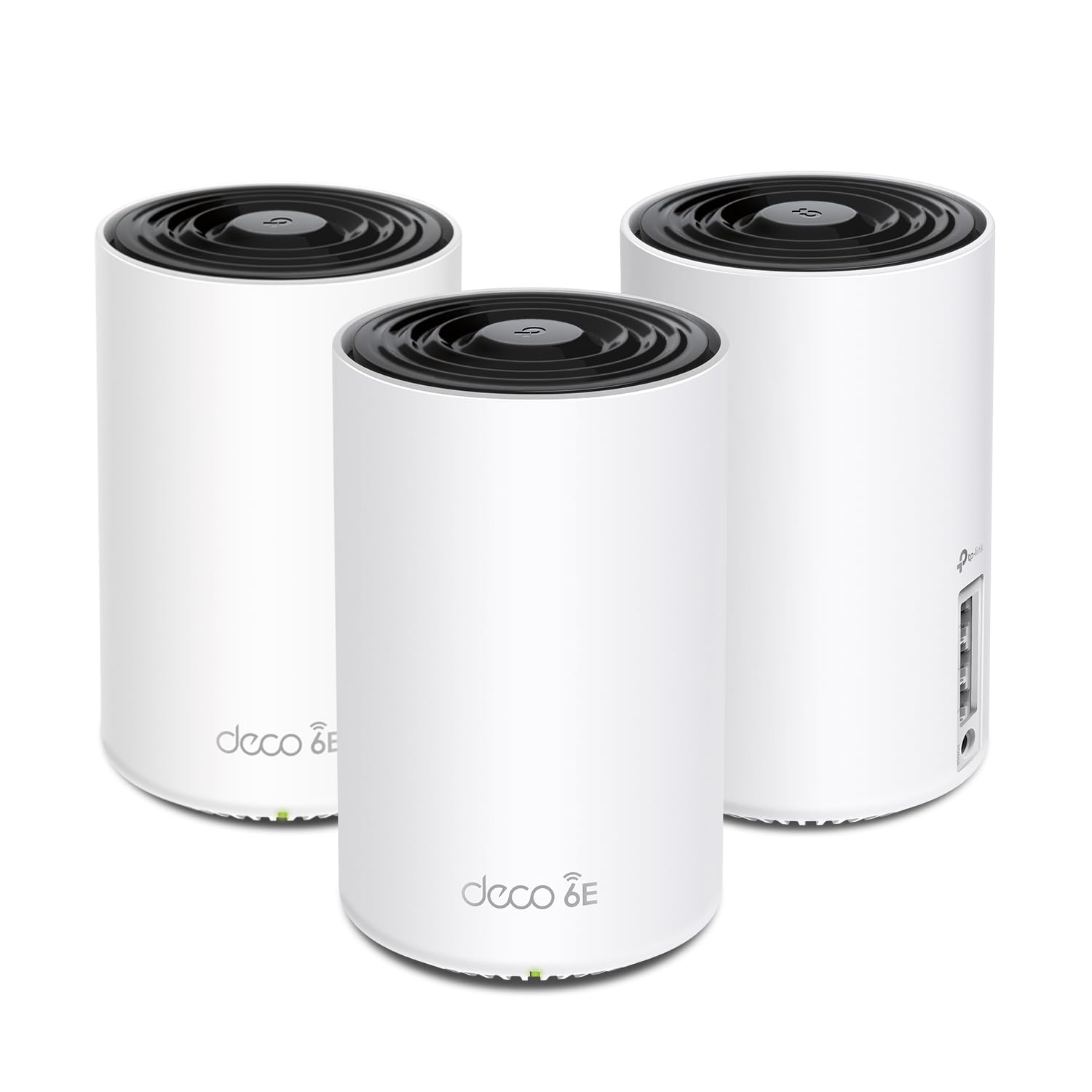
2,000+ ratings
Read Amazon ReviewsTP-Link Deco XE75
Choose the BE63 if you prioritize Wi-Fi 7 and its larger set of multi-gig ports.
The XE75 is a relevant option if you prefer a three-node Wi-Fi 6E system with a higher stated coverage figure and do not need the BE63’s listed Wi-Fi 7 and port configuration.
- The Deco XE75 is a three-unit tri-band Wi-Fi 6E system rated for up to 7,200 square feet and up to 5,400 Mbps across its bands.
- Its 6 GHz band can serve compatible clients or operate as backhaul by default, and it supports up to 200 devices.
- The Deco BE63 is a two-unit Wi-Fi 7 system with four 2.5G ports, a 10G WAN/LAN port, and coverage rated up to 5,800 square feet.
Whole Home & Mesh Wi-Fi Systems alternative
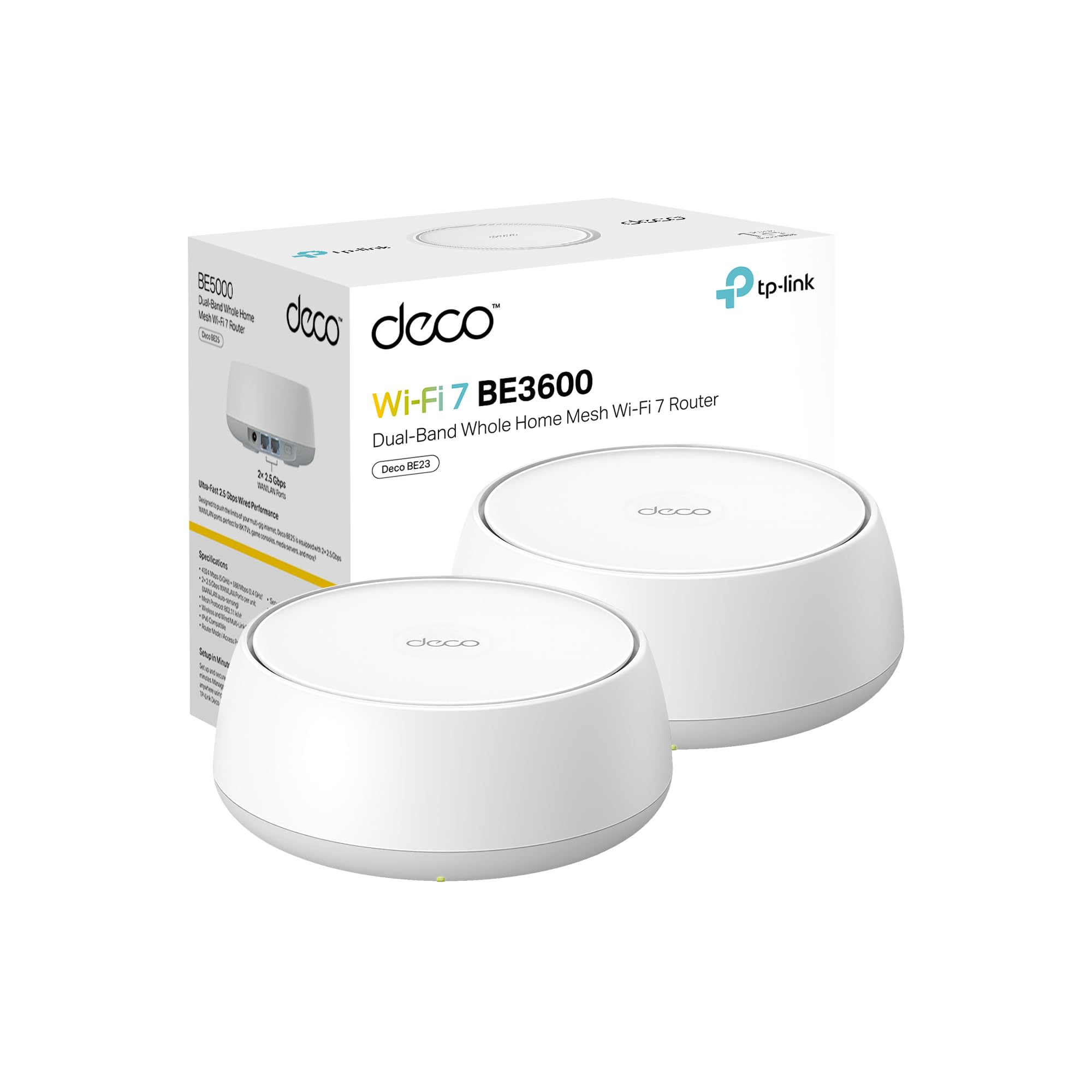
800+ ratings
Read Amazon ReviewsTP-Link Deco BE23
The BE23 is worth comparing if you want a two-unit Wi-Fi 7 mesh with a smaller stated coverage and device capacity and two 2.5G ports per unit.
The BE63 offers a third band, higher stated coverage, and more multi-gig port variety for buyers whose network can use them.
- The Deco BE23 is a two-unit dual-band Wi-Fi 7 mesh system rated for up to 4,500 square feet and 150 devices.
- It lists two 2.5G WAN/LAN ports per unit, MLO, and simultaneous wired and wireless backhaul.
- The Deco BE63 pairs tri-band Wi-Fi 7 with a 10G WAN/LAN port and four 2.5G WAN/LAN ports in a two-unit system rated for up to 5,800 square feet.
Is Deco BE63 Worth It?
The TP-Link Deco BE63 is worth considering for a demanding home network that can use tri-band Wi-Fi 7, several multi-gig wired connections, and flexible mesh backhaul.
Its two-unit design has strong stated coverage and device capacity, along with app management and additional network features.
Buy it when the Wi-Fi 7 and wired options match your equipment and layout, and treat maximum coverage and band rates as planning figures rather than expected results.
If your needs are modest, or you need a modem included, its feature set may be more than you need.
Your review at a glance
600+ ratings
Read Amazon ReviewsTP-Link Deco BE63
A two-unit Wi-Fi 7 mesh system for households that want broad coverage, multi-gig wired connections, and room for many connected devices.
- Two-unit tri-band Wi-Fi 7 mesh system with a combined BE10000 class rating.
- Wireless rates listed up to 5,188 Mbps on 6 GHz, 4,324 Mbps on 5 GHz, and 574 Mbps on 2.4 GHz.
- Coverage rated up to 5,800 square feet and support for over 200 devices.
- Four 2.5G WAN/LAN ports, a 10G WAN/LAN port, and a USB 3.0 port.